
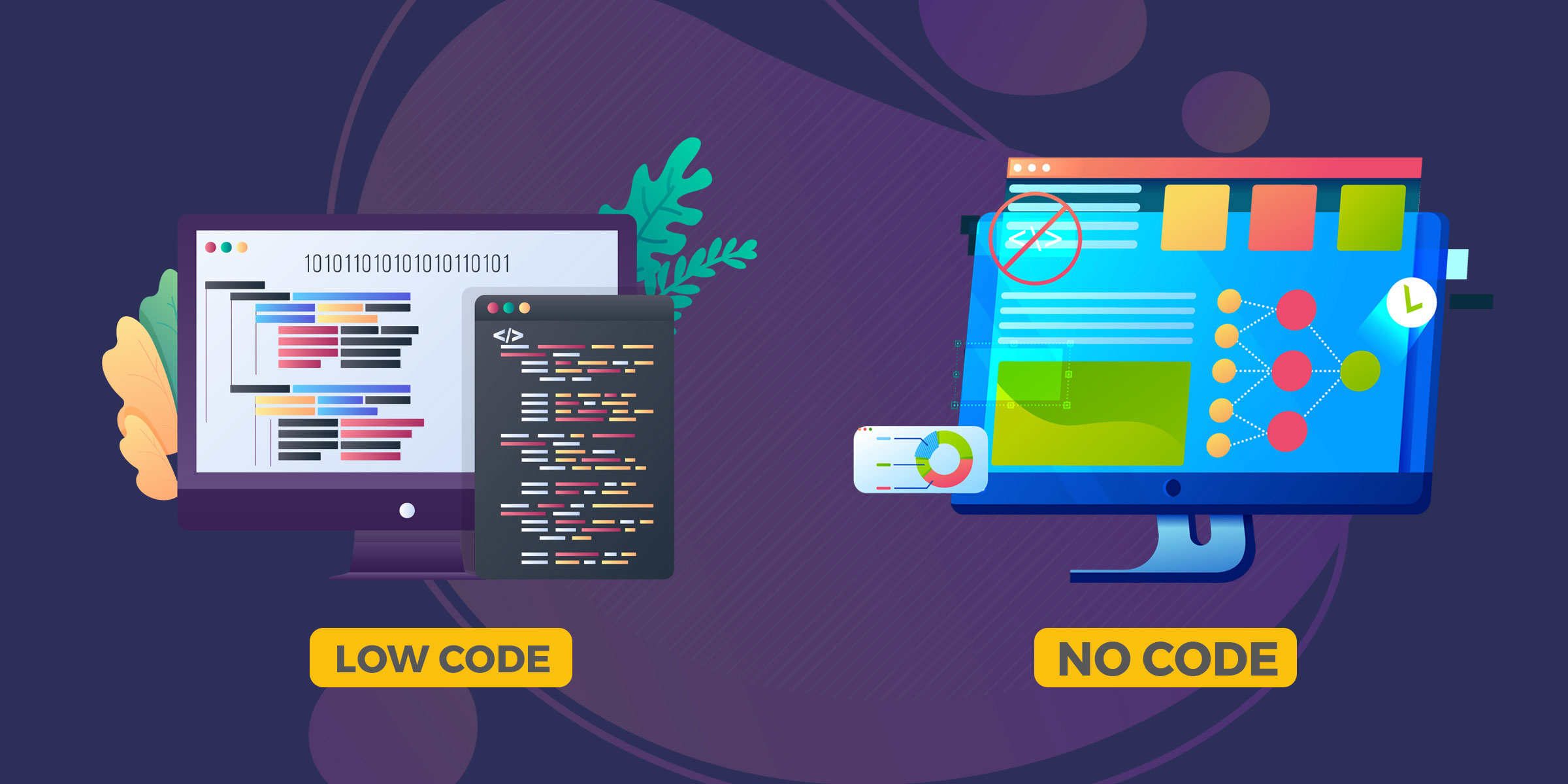
In recent years, low-code and no-code platforms have emerged as game-changers in the software development world. These platforms empower individuals and businesses to create applications quickly, efficiently, and without deep programming knowledge. As demand for digital solutions grows, low-code and no-code tools are revolutionizing the way software is built, making technology more accessible than ever before.
Table of Contents
What Are Low-Code and No-Code Platforms?
Low-code platforms allow developers to create applications using visual interfaces and minimal hand-coding, while no-code platforms eliminate the need for coding entirely. Both approaches aim to simplify application development, reduce time-to-market, and enable rapid iteration.
For example, OutSystems offers a low-code platform that supports complex enterprise-grade applications, while Bubble is a popular no-code platform for building web applications entirely visually. These platforms reduce dependency on traditional development resources, making it easier for startups, small businesses, and even non-technical professionals to launch digital solutions.
Benefits of Low-Code and No-Code Platforms
Speed and Efficiency: Traditional software development can take months or even years. Low-code and no-code platforms allow users to develop applications in weeks or days by using pre-built modules and drag-and-drop interfaces.
Cost Reduction: With minimal coding required, businesses can reduce hiring costs for full-scale development teams. Platforms like AppSheet enable organizations to create custom applications without large IT budgets.
Enhanced Collaboration: These platforms bridge the gap between business users and IT teams. Non-technical stakeholders can actively participate in application design, ensuring that solutions align with business requirements.
Flexibility and Scalability: Modern low-code platforms support integration with existing systems, APIs, and databases. Businesses can start small and scale their applications as needed without major rewrites or overhauls.
Real-World Applications
Low-code and no-code solutions are transforming various industries:
Healthcare: Hospitals are using platforms like Quick Base to build patient management and telemedicine apps quickly.
Finance: Banks and fintech companies use low-code tools to streamline workflows, process loans, and manage compliance efficiently.
Education: Schools and universities deploy no-code solutions to create learning management systems, attendance trackers, and communication portals.
E-commerce: Retailers leverage low-code platforms to launch custom marketplaces, inventory trackers, and customer engagement apps rapidly.
Challenges and Limitations
While low-code and no-code platforms offer significant advantages, they are not without challenges.
Complexity Limitations: Highly specialized or complex applications may still require traditional coding.
Security Concerns: Applications built on these platforms must follow best practices to ensure data protection and compliance. Tools like Mendix offer built-in security features to address these issues.
Vendor Lock-In: Businesses must carefully evaluate platform dependency, as migrating applications to another system can be difficult.
The Future of Application Development
The rise of low-code and no-code platforms represents a democratization of software development. By enabling anyone with an idea to create functional applications, these platforms are fostering innovation across industries. Analysts predict that by 2030, over 65% of all application development will leverage low-code tools, transforming the software landscape.
In conclusion, low-code and no-code platforms are not just a trend they are a fundamental shift in how applications are built and deployed. By empowering non-developers, reducing costs, and accelerating delivery, these platforms are paving the way for a more inclusive and innovative software ecosystem. Businesses that adopt these tools today will gain a competitive edge, unlocking new opportunities in an increasingly digital world.
Also Check Rise of AI-Powered Software – Transforming Businesses in 2026
1 thought on “Low-Code and No-Code Platforms – Building Super Apps – 2026”