
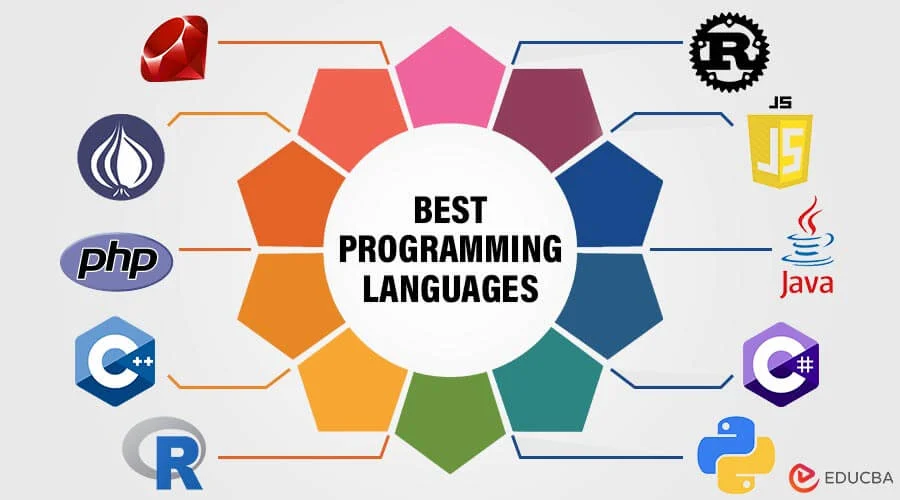
In the rapidly evolving world of technology, staying up-to-date with programming languages is essential for developers, tech enthusiasts, and aspiring software engineers. As we move through 2026, certain languages continue to dominate the industry, while others emerge as valuable tools for specific domains such as AI, web development, and cloud computing. Understanding which programming languages to learn can significantly impact your career growth and project efficiency.
Table of Contents
1. Python: The Language for AI and Data Science
Python remains one of the most popular programming languages due to its simplicity, readability, and versatility. It is widely used in data science, machine learning, artificial intelligence, and web development. Python’s extensive libraries such as NumPy, Pandas, and TensorFlow make it ideal for data analysis, AI model training, and automation. Beginners often choose Python as their first programming language due to its easy-to-understand syntax and active community support.
2. JavaScript: Building Interactive Web Applications
JavaScript is the backbone of modern web development, enabling dynamic and interactive websites. Alongside frameworks like React, Angular, and Vue.js, JavaScript allows developers to create responsive front-end applications and scalable back-end solutions with Node.js. With the rise of web apps, progressive web apps (PWAs), and single-page applications (SPAs), JavaScript remains a crucial language for full-stack development.
3. Java: Enterprise and Mobile Development
Java has been a reliable programming language for decades, particularly in enterprise software, Android app development, and large-scale systems. Platforms like Spring provide robust tools for building secure, scalable applications. Java’s portability through the Java Virtual Machine (JVM) ensures that code runs consistently across devices, making it indispensable for businesses maintaining long-term software projects.
4. C#: Microsoft Ecosystem and Game Development
C# is a versatile language primarily used in the Microsoft ecosystem and game development with Unity. Its object-oriented features and strong type safety make it suitable for building desktop applications, enterprise solutions, and interactive games. Developers looking to work on Windows applications, VR experiences, or cross-platform games often find C# invaluable.
5. Go (Golang): High-Performance Cloud Applications
Go, also known as Golang, is gaining popularity for cloud computing, microservices, and performance-critical applications. Developed by Google, Go emphasizes simplicity, concurrency, and fast compilation. Tools like Docker and Kubernetes are built using Go, demonstrating its importance in the cloud-native and DevOps ecosystem.
6. Rust: Safe and Efficient Systems Programming
Rust is a systems programming language designed for safety and performance. It prevents memory leaks and concurrency issues, making it ideal for systems programming, embedded devices, and blockchain development. Platforms such as Substrate use Rust to develop scalable blockchain solutions. Rust’s growing popularity indicates a shift towards safer, high-performance programming practices.
7. TypeScript: Enhancing JavaScript for Large-Scale Projects
TypeScript is a superset of JavaScript that introduces static typing, making it easier to manage large codebases. It is widely used in enterprise web development and frameworks like Angular. TypeScript helps developers catch errors during development, improving code quality and maintainability. Its compatibility with JavaScript ensures a smooth adoption curve.
8. Kotlin: Modern Android Development
Kotlin is the preferred language for Android development, offering concise syntax, null safety, and seamless integration with Java. Google officially supports Kotlin for Android apps, making it essential for developers in the mobile ecosystem. Platforms like Jetpack Compose allow Kotlin developers to build modern, responsive UI efficiently.
9. SQL: The Language of Databases
Structured Query Language (SQL) remains crucial for managing and querying relational databases. Knowledge of SQL is indispensable for data-driven applications, reporting tools, and back-end systems. Popular database platforms like MySQL, PostgreSQL, and Microsoft SQL Server continue to rely on SQL as a standard for database interaction.
10. R: Advanced Statistical Analysis
R is widely used in statistics, data analysis, and machine learning. It offers robust packages for data visualization, predictive modeling, and analytics. R remains essential for data scientists and researchers working with complex datasets, providing insights that drive business decisions and scientific research.
Choosing the Right Language
Selecting the best programming language depends on your goals:
- Web development: JavaScript, TypeScript, Python
- Mobile development: Kotlin, Java, Swift
- Systems programming: Rust, C++
- AI and data science: Python, R
- Cloud and DevOps: Go, Python, Java
By understanding the current trends and industry demands, developers can focus on languages that align with their career path, project needs, and future innovations.
In conclusion, staying updated with programming languages in 2026 is essential for thriving in the tech industry. From Python and JavaScript to Rust and Go, each language offers unique advantages that cater to specific domains. Learning these languages not only enhances employability but also empowers developers to contribute to innovative projects across AI, web development, cloud computing, and software engineering. Embrace continuous learning, explore multiple languages, and adapt to emerging technologies to stay ahead in the competitive world of coding.
Also Check Open-Source Software Revolution – Collaboration for Innovation – 2026
1 thought on “Best 10 Programming Languages to Learn in 2026”