
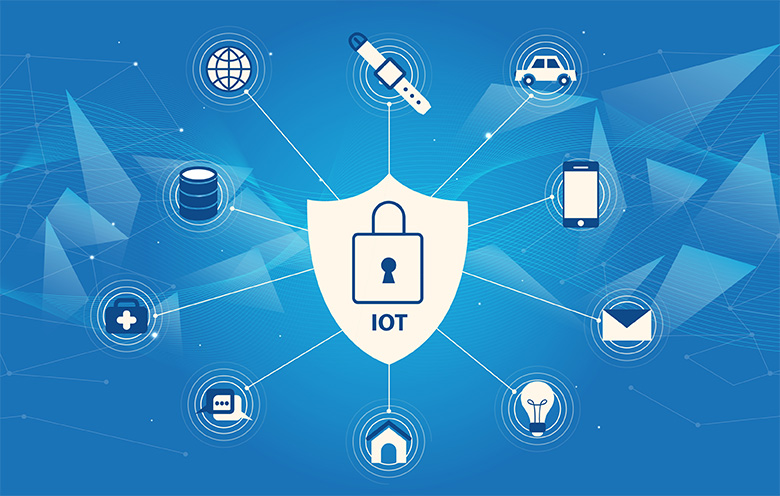
Understanding IoT security challenges and implementing best practices is critical for building safe and reliable connected systems.
As the Internet of Things (IoT) continues to expand, billions of connected devices are now part of our daily lives. From smart homes and healthcare systems to industrial automation and smart cities, IoT devices collect and transmit massive amounts of data. While this connectivity brings efficiency and innovation, it also introduces serious security challenges.
Weakly secured IoT systems can become easy targets for cyberattacks, putting data, privacy, and even physical safety at risk.
Table of Contents
Why IoT Security Is a Major Concern
Unlike traditional IT systems, IoT devices often operate with limited processing power and minimal user interfaces. This makes them harder to secure and easier to exploit.
Security concerns arise because:
- Devices are always connected to the internet
- Large numbers of devices increase attack surfaces
- Many devices lack regular updates
- Sensitive data is continuously transmitted
Experts from Cisco IoT security emphasize that IoT security must be built into systems from the design stage.
Common IoT Security Challenges
IoT ecosystems face unique security risks that developers must address.
Weak Authentication Mechanisms
Many IoT devices use default or weak passwords, making them vulnerable to unauthorized access.
Insecure Communication Channels
Unencrypted data transmission allows attackers to intercept sensitive information.
Lack of Regular Updates
Some IoT devices do not support automatic firmware updates, leaving known vulnerabilities unpatched.
Physical Device Tampering
Since IoT devices are often deployed in public or remote locations, attackers can physically access and manipulate them.
Data Privacy Risks in IoT
IoT devices collect personal and behavioral data, raising privacy concerns.
Examples include:
- Health data from wearables
- Location data from smart vehicles
- Home activity data from smart devices
Organizations must follow privacy-focused frameworks recommended by General Data Protection Regulation to protect user data.
Best Practices for Securing IoT Systems
Implementing security best practices significantly reduces IoT risks.
Strong Device Authentication
Each IoT device should have a unique identity. Using certificates and secure authentication mechanisms prevents unauthorized access.
Encrypt Data at All Levels
Encryption should be applied to:
- Data at rest
- Data in transit
- Device-to-cloud communication
Cloud providers such as AWS IoT security support built-in encryption features.
Regular Firmware Updates
Secure update mechanisms ensure that vulnerabilities are patched promptly. Devices should support over-the-air (OTA) updates to maintain long-term security.
Network Segmentation
Separating IoT devices from critical networks limits the impact of potential breaches.
Continuous Monitoring and Logging
Monitoring device behavior helps detect anomalies and potential attacks early. Security teams can respond faster when threats are identified.
Secure Application Development
Secure coding practices are essential for IoT applications.
Developers should:
- Validate input data
- Avoid hardcoded credentials
- Use secure APIs
- Implement access control
Security guidelines provided by OWASP IoT Top 10 offer practical recommendations.
Role of Cloud Security in IoT
Cloud platforms play a critical role in IoT security by providing centralized management, authentication, and monitoring.
Services offered by Microsoft Azure IoT enable secure device onboarding and lifecycle management.
Balancing Security and Performance
IoT security must balance protection with device performance. Lightweight encryption and optimized security protocols are often used for low-power devices.
Future of IoT Security
The future of IoT security will focus on:
- AI-based threat detection
- Zero-trust architectures
- Automated security updates
- Hardware-based security modules
These innovations aim to create more resilient IoT ecosystems.
Conclusion
IoT security is a critical component of any connected system. While IoT devices offer powerful capabilities, they also introduce unique vulnerabilities that must be addressed proactively. By implementing strong authentication, encryption, regular updates, and continuous monitoring, organizations can protect IoT systems from evolving cyber threats.
As IoT adoption grows, security-first design will be essential for building trustworthy and scalable connected solutions.
Also Check Top IoT Applications Transforming Industries in 2026
1 thought on “IoT Security Challenges and Best Practices – 2026”